Tango Game Review
Related Products
A SHORT OVERVIEW OF THE TANGO GAME
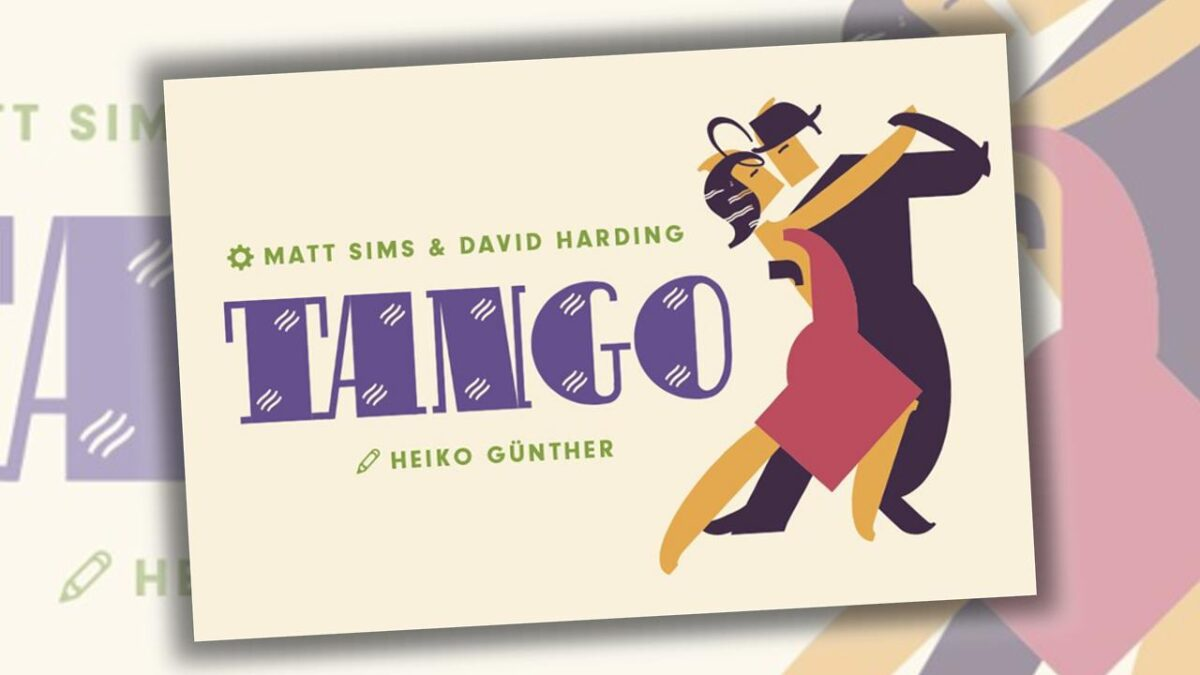
Tango.
What a great name for this bribery game. It's a cute play on words, of course, because Tango is strictly for two players. It takes two to tango - and so does Tango. But for a name to be truly successful, one joke is not enough. Tango is also a very apt name. David Harding and Matt Sims have created a game that is built entirely on coordination. And, frankly, there's something a little seductive about this game when you and your opponent are completely immersed in the process.
Let's take positions. Each player is dealt two "hands" of cards. One hand follows the usual rules - that is, you hold it in your hands. This is, if you will, the "hand hand", or pie activo. The other, pie soporto, is laid out in front of you on the table in the form of five stacks of two cards: the top cards are face up, and the bottom cards are face down. We will call this the "table hand".
Now we can start moving. The basic step to the cross is not that difficult, so let's try: I play a card from my "hand", you play a card from your "hand", keeping to suit if possible; then I play a card from my "table hand", also keeping to suit if possible; and finally you play a card from your "table hand", again keeping to suit if possible. There should be a "follow my lead" joke somewhere in here.
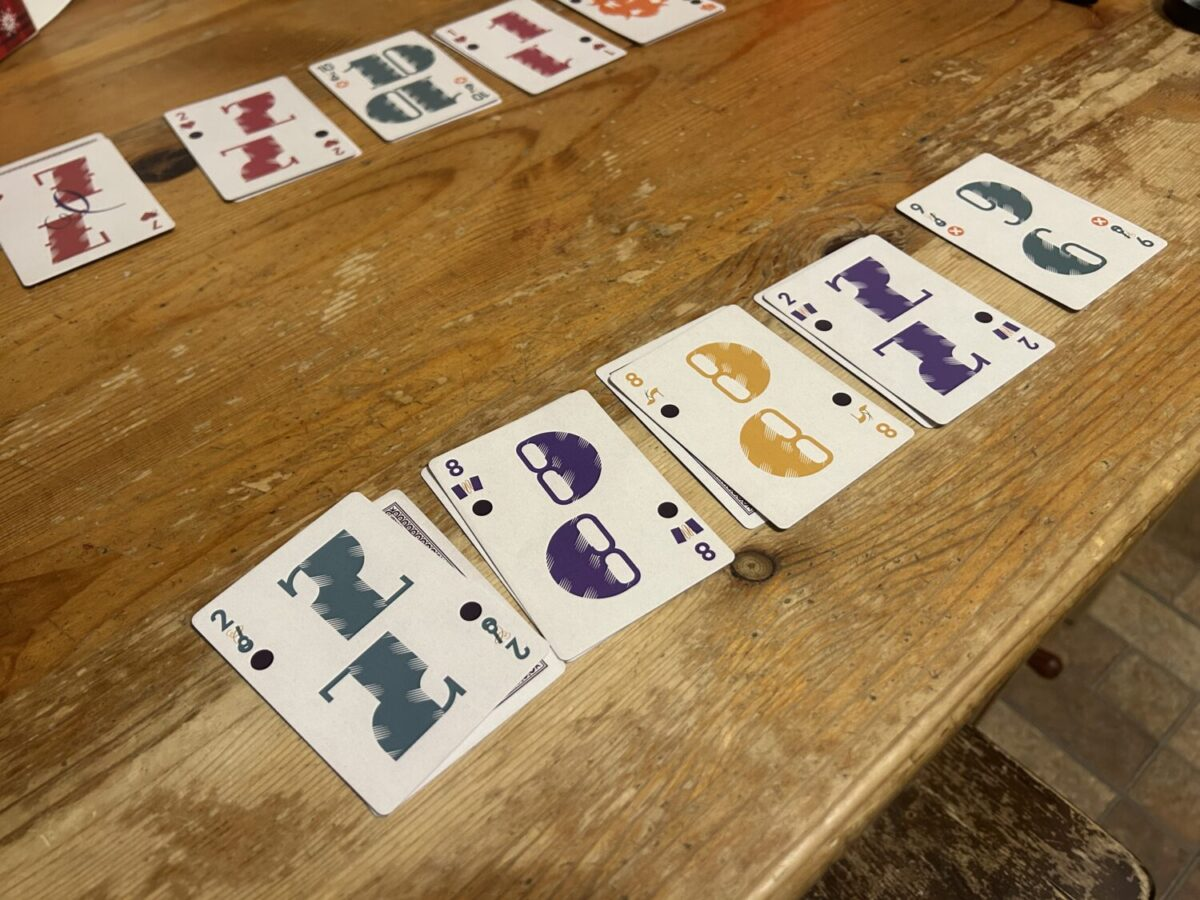
The winner is either the player with the highest value card in the suit played, or the one with the oldest trump card - but be careful. In Tango, winning is not always an end in itself. Some cards give penalty (negative) points, while others bring nothing at all. It is a constant exchange of benefits. You find yourself looking for an opportunity to "drop" a nine or ten of the wrong suit, so that your opponent can then rake in the consequences of winning such a trick. Even when positive points are at stake, sometimes it is more profitable to lose.
The trump card in Tango is determined by the card remaining after forty out of forty-one cards have been dealt. However, it does not remain so for long. After each draw, the losing player can exchange the trump card for any card from his “hand”. The control of the trump card and the ever-changing relationship with it are extremely important. In fact, this is what the dance is all about: each change of suit is an ornament of movement (adornos) that makes the dance unforgettable. This is even more important because the only card in the game that brings two points – the Rose – is always considered the zero card of the trump suit. If you have it, you “dance” in such a way as to prevent your opponent from getting it. If not, you try to make your opponent stumble.
The constant fluctuations inherent in this system are not for everyone, but in my opinion, Tango is something divine. The game is full of an exciting combination of the known and the partially unknown. You see the contents of both your “hands” and your opponent’s “table hand”. You have a rough idea of which suits he can support and which he cannot, but his “table hand” remains a mystery. One well-chosen trump card substitution can completely change the course of the game. Sometimes it seems that nothing can stop you, and you are easily gliding across the “dance floor”. And sometimes it seems that nothing is happening at all. Usually it all comes down to player mistakes, not the whims of fate. In a dozen games of Tango, I have never once had the feeling that I was “unlucky” with the hand.
Like any dance, Tango requires a sense of rhythm. Like any dance, it can be awkward at first—you might get out of step or trip over something. Like any dance, it’s built on solid foundations, but it rewards attentiveness with moments of brilliance. So grab your castanets, get your hands ready for applause—and let’s Tango!


