
Review and Impressions of the Game Norsewind
Related Products
Norsewind (2025, Aporta Games) is a board game for 1–4 players that takes about 15–20 minutes per player. The strangest thing about Norsewind —aside from my burning desire to call it Norsewood instead of Norsewind—is that it seems to try so hard to be “average.”
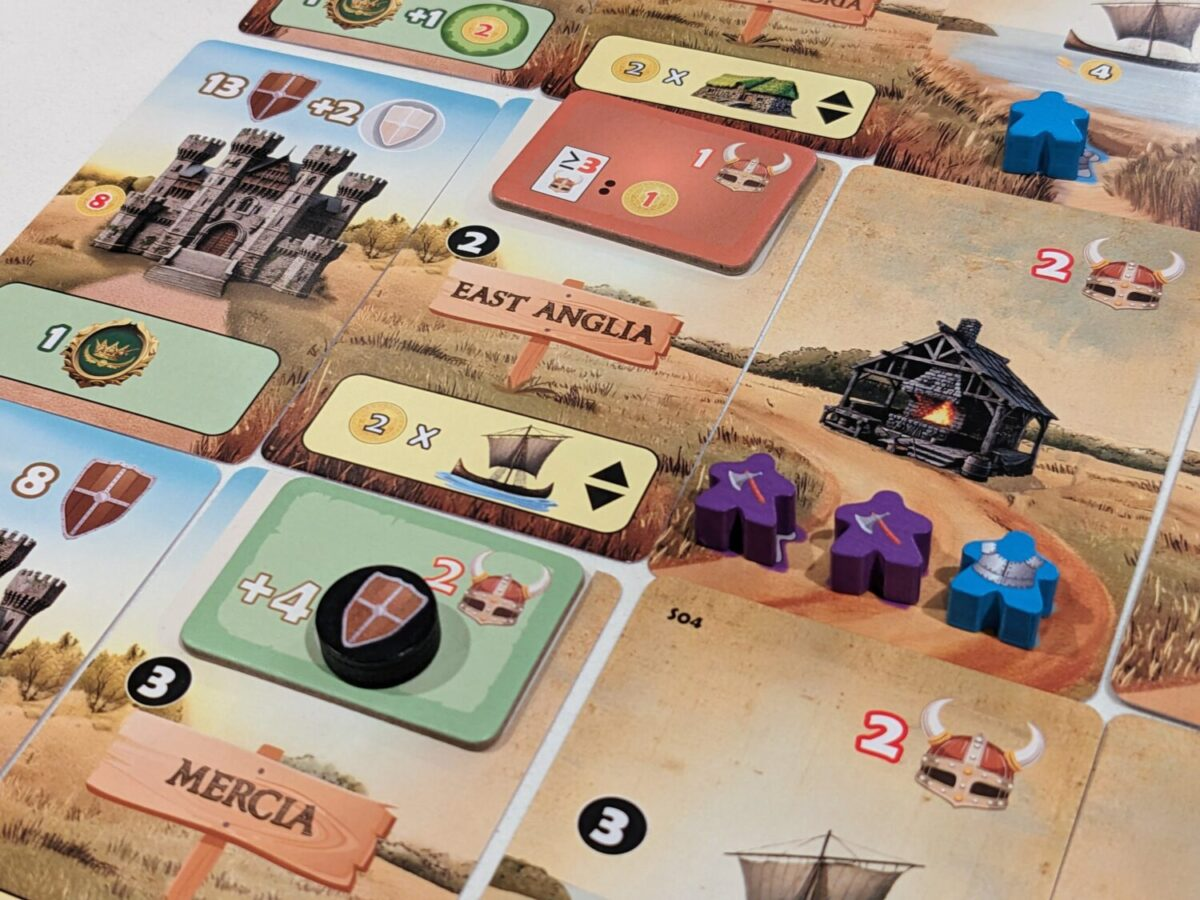
Players draft cards from one of five suits and place them in one of four rows of their kingdom. Some cards have Viking helmets, which is bad, and some have shields, which is good. At the end of the game, you must form rows with at least as many shields as helmets (or more) for the row to score points.
The only "highlight" that Norsewind offers is the moment of choice during the draft of a card. When a player adds a card to his scoreboard, he receives income depending on one type of building that is present in all other rows of his kingdom. In addition, one meeples can be taken from two limited cells next to each card slot in the market. These meeples are placed in cells of the corresponding color and help to strengthen the value of buildings at the end of the game.
In a separate area outside the market, castles are sometimes available for purchase. They increase the number of shields in a row, as well as adding the potential for prestige points. Combined with meeples on building cards, a row brings positive points if the number of shields exceeds the number of helmets.
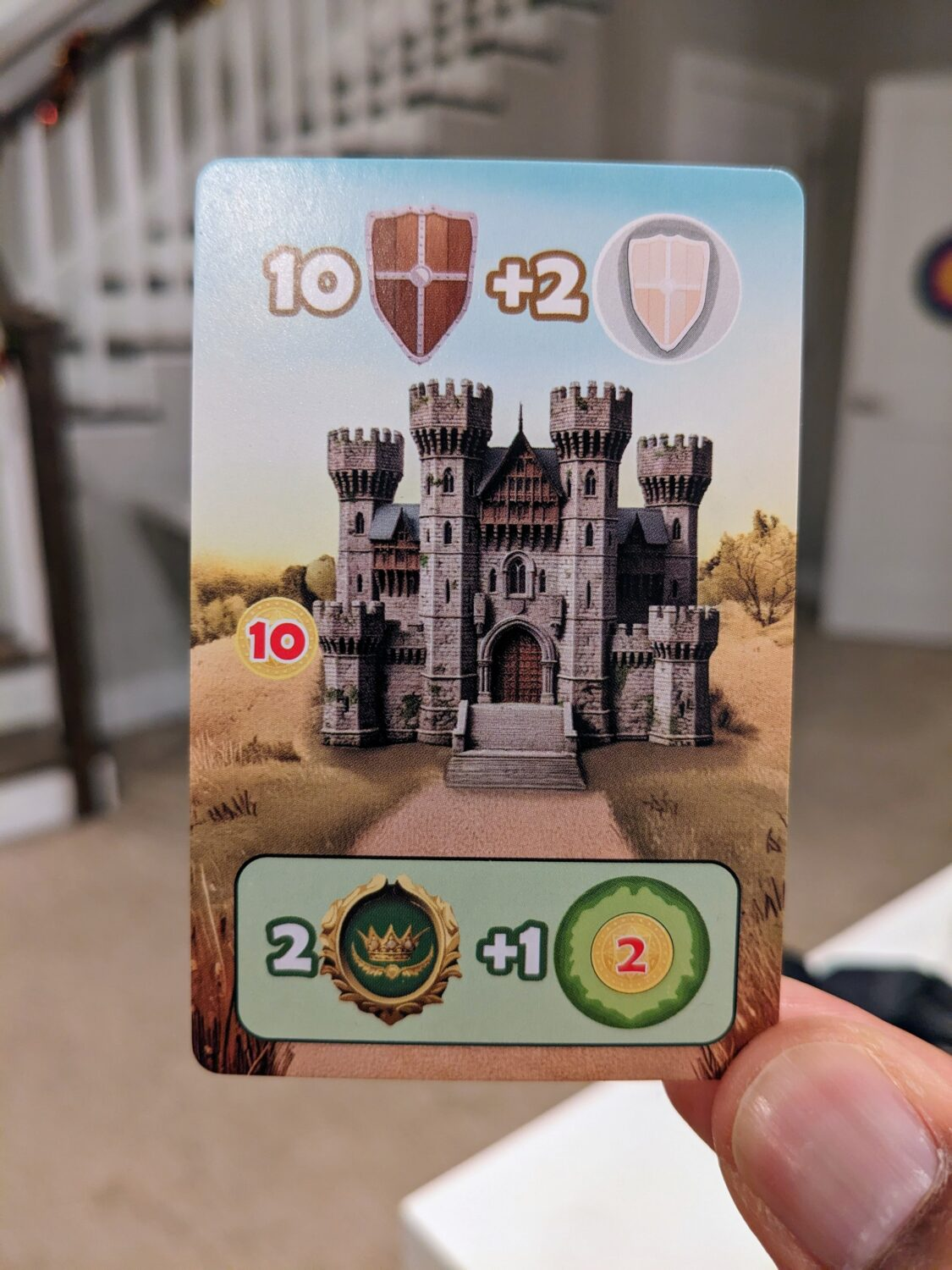
That's it. There's not much variety in the buildings, and the difference between castles mostly comes down to their "profitability". In a game with such a small number of cards, you quickly start to intuitively find the best castles for the lowest price, so it's very important to have a reserve of money at the right time. And since the player loses seven points if the number of helmets in a row exceeds the number of shields, you have to constantly watch out for this to happen.
Norsewind is a good game, but for an experienced player who has tried dozens, if not hundreds, of other games in the genre, it really struggles to stand out. There is a slight variation in the game setup: four different tiles are used to set the rules for each player's kingdom rows, and they are chosen from a set of 10. That's fine. But as a fan of other games by these authors, I would rather go back to Zhanguo: The First Empire and Kingdom Crossing than venture into the Viking world again.


