Introduction to the Game Keep The Faith
Related Products
KEEP THE FAITH GAME REVIEW
In the midst of Suzanne Herbert’s excellent documentary “Natchez,” religious fundamentalists stage a Westboro Baptist Church-style protest outside an LGBTQI+ event, holding signs denouncing sin and predicting a hellish fate for the “lost” souls inside. One of the men reads passages from Scripture into a megaphone, citing chapters and verses to support his belief that the drag queens hosting the event will go to hell.
For some reason, at that moment, I was particularly struck by how absurd it seemed that this man would refer to texts written over two thousand years ago to explain his modern beliefs. Although no, “explain” is not quite the right word, and “justify” does not fully convey my feeling either. I recognize and understand the power of the Bible as a collection of parables that convey moral lessons, ask questions, and make sense of universal human experience. But this man was doing nothing of the sort. He was quoting the most popular book of all time as an unquestionable command. It is these dusty ancient words that still make him believe today that homosexuals will go to hell.
For him and his like-minded people, the text of faith is faith itself. It is an end point, not a signpost. For him, the Holy Scriptures can neither change nor be changed. They are unwavering, merciless and irrefutable. Words written more than two millennia ago must be fulfilled literally even today, when the function once performed by animal sacrifices can be replaced by simply opening a weather forecast app on your phone.
I don't think that's how religion works. In fact, I don't think that's how anything works. History shows that religions are constantly in flux: they shift priorities, they split, they reform, and they reunite. That's the view that game designer Greg Loring-Albright seems to be making in his new game Keep the Faith, in which players tell the story of "a religion going through a period of change."
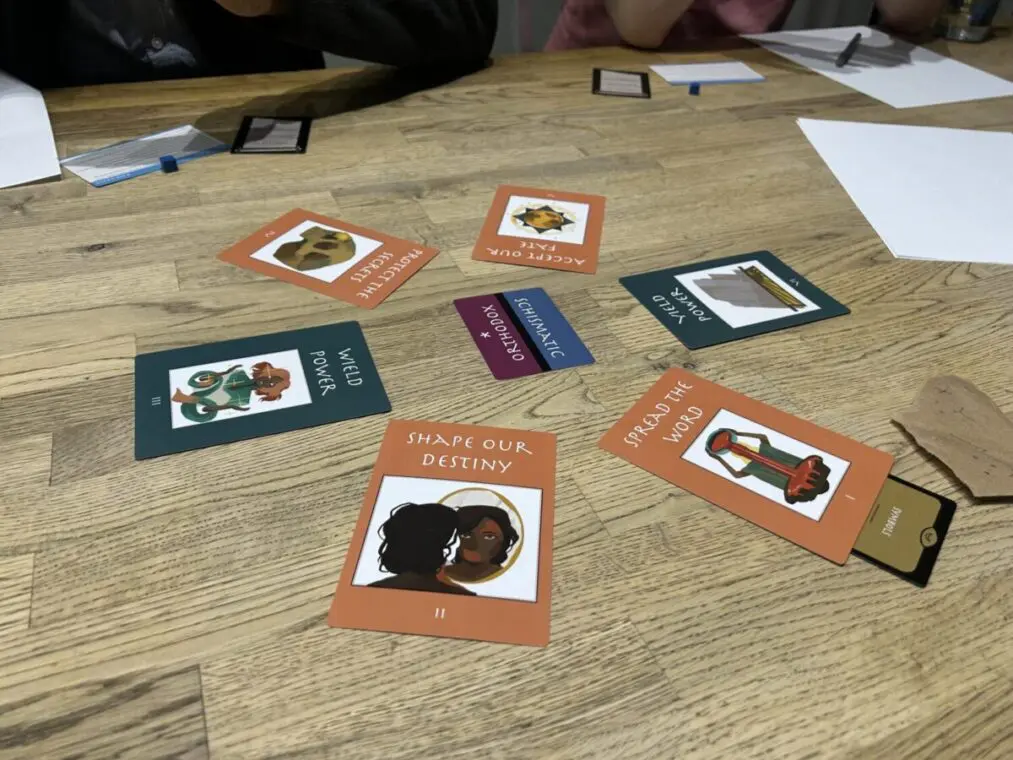
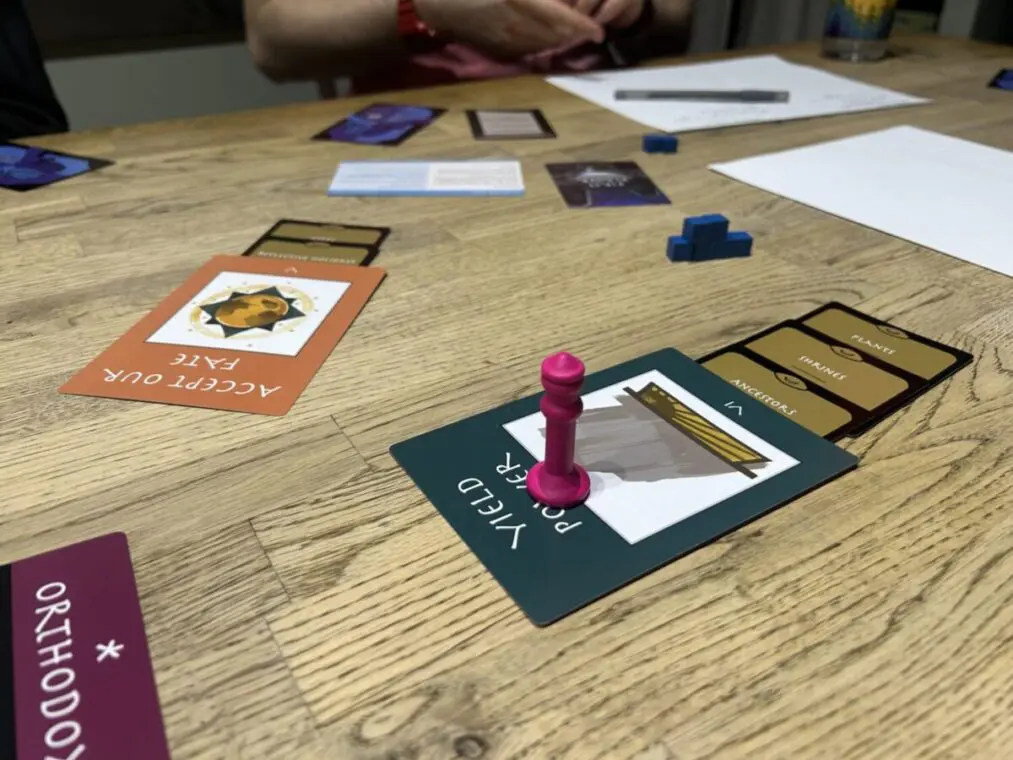
At the beginning of the game, you have six pillars, divided into two groups of three. They form the orthodox and schismatic currents. If the orthodox branch considers it its duty to spread the faith, then the schismatic, for example, is convinced that the first thing to do is to protect our secrets. If the schismatics believe that we should actively influence our own destiny, then the orthodox, on the contrary, believe that we should accept it as it is. Players take turns adding one Aspect card to any of the pillars and tell the story. I add the “Plants” card to the “Accept the Stranger” pillar and say: “Since our religion originated in a barren area, growing plants has always had enormous cultural significance. The outside of each temple is covered with vines, bushes, flower beds, and there are benches nearby, where even those who do not profess our faith can sit and be among nature. Of course, we always keep literature on hand in case they show interest.”
Keep the Faith is primarily an exercise in collaborative storytelling, and the rules of the game make that clear. The guide advises you to make decisions that make the story more interesting, rather than trying to win at anything, which is almost irrelevant within the game itself. The game mechanics are there, of course: each player has a secret Goal that they aim to accomplish by the end of the five rounds. But they are so well balanced that they only push you when you're running out of ideas, and hardly get in the way when you're inspired.
As the game progresses, definitions begin to shift. What was once considered orthodox may become schismatic. The entire religion as a whole moves from stability to discord—and maybe back again. Or maybe not. It all depends on you, on the story you want to tell. The more Aspects a particular pillar accumulates, the more importance it is given by the community and the more central it becomes to that religion.
As a statement—and it is a statement—Keep the Faith demonstrates a sober, humanistic perspective. Religions grow and change because of the very nature of man, because of his inner variability, and with the times in which they exist. To take one’s beliefs as infallible is to misunderstand the very nature of faith. It must be constantly questioned. Only then can it grow stronger.