
Let's Take A Walk Through HUTAN
Related Products
TRAVELING THROUGH THE TROPICAL FOREST
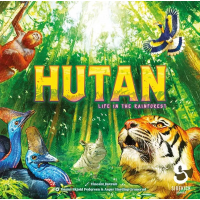
To my pleasant surprise, no. Hutan is a great game focused on planting flowers and trees to create an animal-friendly ecosystem in the jungles of Indonesia. Fans of other nature board games like Cascadia, Botanik, The Isle of Cats, and New York Zoo will love it.
The game was created by Asger Harding Granerud and Daniel Skjold Pedersen, and the wonderful artwork is by Vincent Dutrait.
So pack your backpack and hiking boots — let's head into the hot and humid jungle!
GREEN MOSAIC
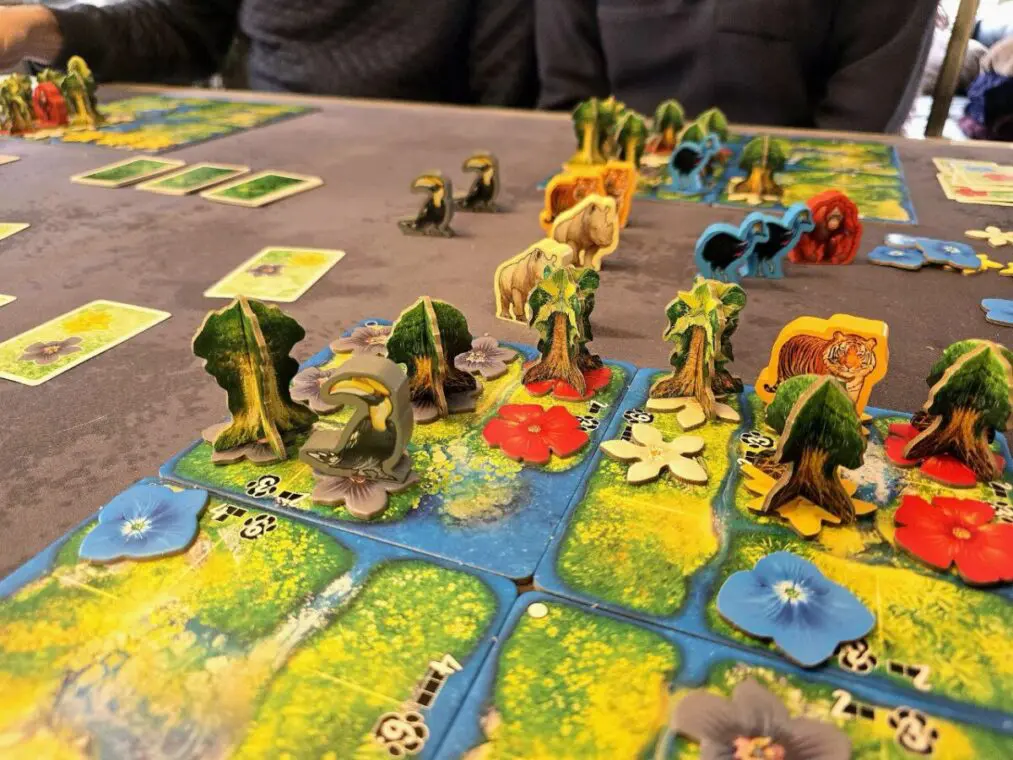
In Hutan, the game lasts nine rounds, during which players try to build their ecosystem as efficiently as possible to score the most victory points. Each player's playing field consists of four tiles, each of which has nine sections with regions of varying sizes.
Points are awarded for filling regions with flowers of the same color, growing trees, and placing animals (represented by cute, massive meeples). However, the real challenge lies in the rules for placing components.
Players draft a card that allows them to place one to three flowers on the board, either of different colors or of the same color. After the initial placement, new flowers must be adjacent to flowers already laid out (or placed on top of a flower of the same color), and subsequent placement must continue from this chain.
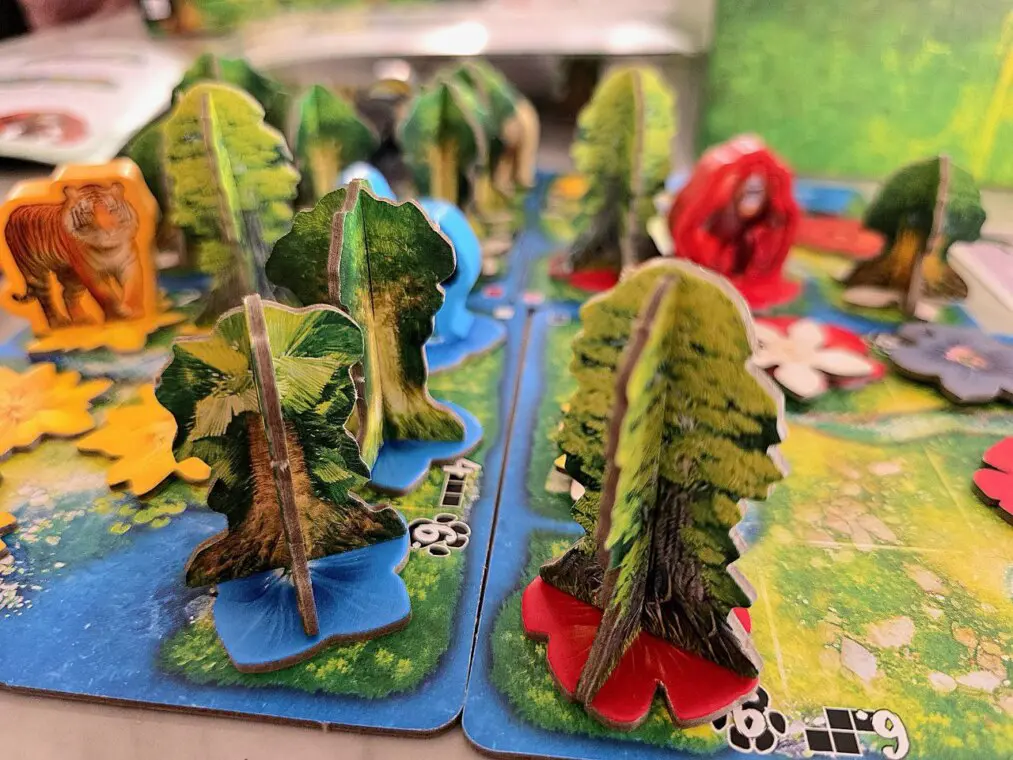
What seems like a minor rule at first glance quickly becomes a real puzzle, as players receive penalty points for regions that are only partially filled or filled with flowers of different colors. However, there is a way to mitigate these losses: flowers can be stacked in two layers. This allows you to grow a tree that brings extra points even in such "problematic" regions.
If the player grows the last tree needed to complete a region, it turns into an animal (the number of such figures is limited). Placing an animal triggers an additional effect: new trees appear on the field, opening up even more opportunities for ecosystem development.
The game also features an open-ended objective option, which awards additional points based on the board configuration at the end of the game. This adds another strategic dimension, forcing players to plan their actions not only for the immediate development of the ecosystem, but also with long-term goals in mind.
JUNGLE EXPEDITION
At first I thought, "Oh, what a great game! It's probably a standard, simple solo mode like 'try to beat your own score.'" But I quickly realized I was wrong.
The game has a whole series of scenarios with different levels of difficulty. In them, the player must not only score a minimum number of points, but also fulfill certain additional conditions. And believe me, it is not easy at all! It took me several attempts to complete even the first scenario.
In addition, Hutan includes a set of ready-made modifiers that allow you to increase or decrease the level of difficulty of the game. And the developers thought that this was not enough: there is also a system of achievements that players can unlock, as well as a tracker for tracking their own successes in creating an ecosystem and growing plants.
THE ART OF PLANTING
I absolutely love this game. It's a short, fast-paced game that leaves you feeling satisfied after every play. In one hour, I managed to play four solo games, each ending with the familiar feeling of "One more!"
My wife commented with admiration that the game reminded her of A Gentle Rain, which she called a “cozy puzzle.” Another player said that playing the game felt like solving Sudoku—in the best sense of the word.
Since Hutan is played very quickly, efficiency is the main challenge. At the beginning of the game, everything seems simple enough: the forest is spacious and there are many possibilities for placing components. However, towards the end of the game, the free space disappears rapidly and you have to explore new regions, which almost inevitably leads to penalty points. I have never seen a game where someone did not receive negative points. It is inevitable, but it is in finding ways to minimize these losses that a lot of the fun lies.
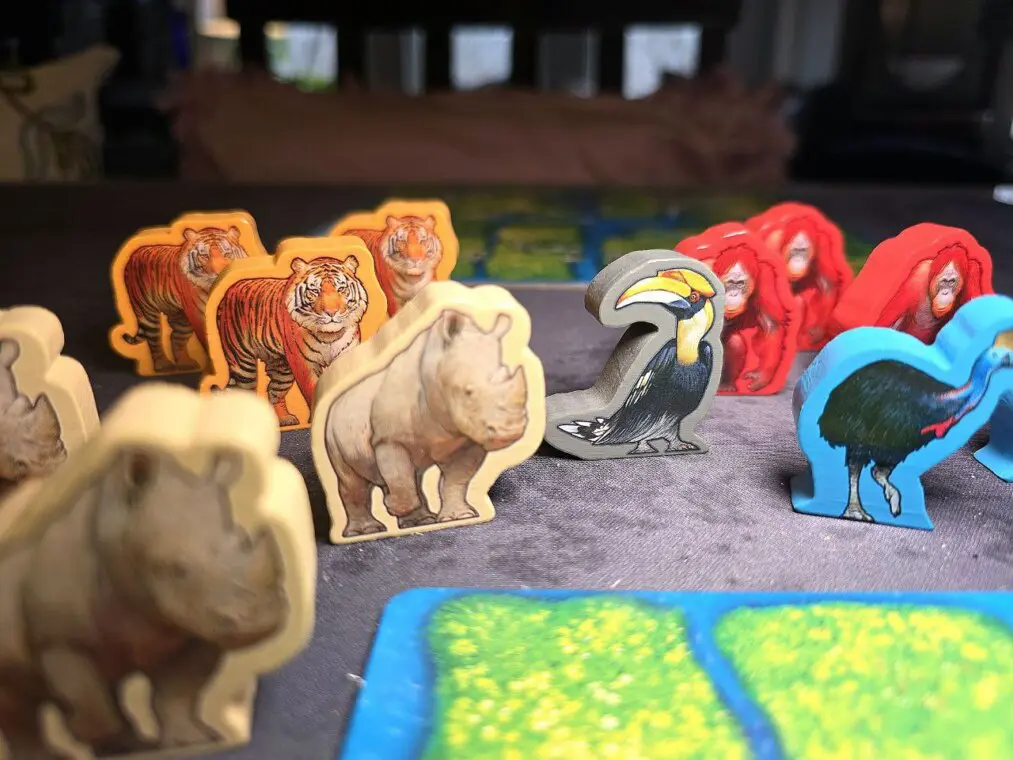
Placing animals becomes a real strategic race, as the number of these figures (and each of their colors) is limited. Animals activate additional flower placement and tree growth in adjacent sections, making them one of the most effective tools in the game. At the same time, you can carefully prepare the perfect move only for the dream yellow Sumatran tiger figure to disappear from the reserve early and end up in someone else's rainforest!
I highly recommend always playing with open objectives. Even if you don't specifically work towards them, the final configuration of your playing field will almost certainly allow you to complete several of them and get a nice bonus of extra points at the end of the game.
THE FOREST IS CALLING AGAIN
The only minor drawback of the game is the almost complete lack of interaction between players. It is quite difficult to keep track of what your opponents are working on, and even more difficult to understand the current point ratio during the game. However, this is a typical feature of tile-laying and drafting games, so it is worth considering this before starting the game.
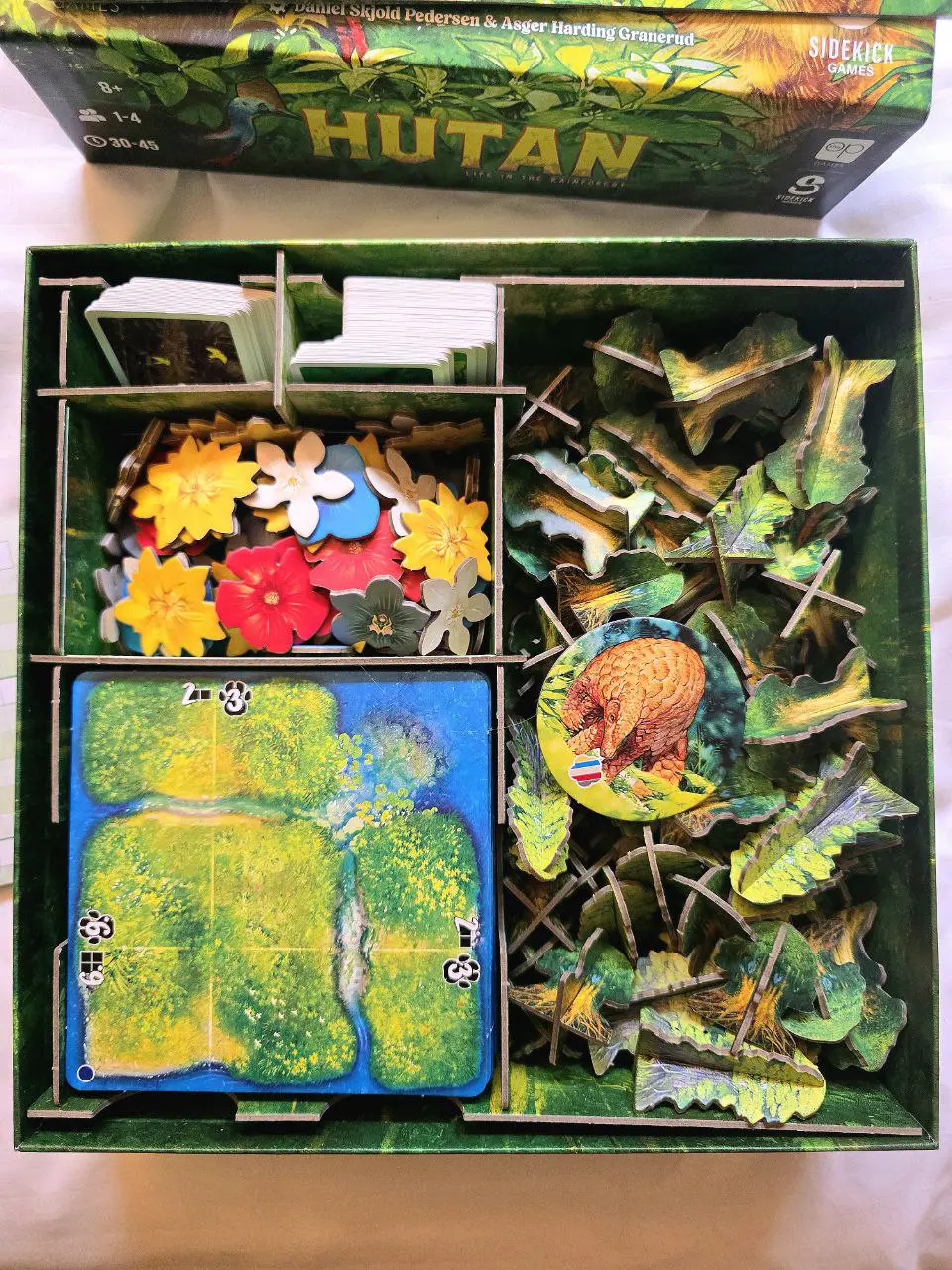
Hidden in the box is a huge amount of variation that allows you to keep your rainforest fresh and exciting for many games. The playing fields are double-sided, and their tiles can be arranged in different directions, creating new spatial challenges each time. The organizer, which you need to assemble yourself, deserves special praise. It is not only practical, but also provides beautiful and orderly storage of all the game components.
It's safe to say that Hutan has already become one of the main contenders for my game of the year. The peaceful, diverse and vibrant world of the rainforest beckons me back again and again, and I'm happy to embark on this hot and humid jungle adventure every time.
1 450 грн.
Hutan: Life in the Tropics (ukr)
DESCRIPTION OF THE BOARD GAME HUTAN: LIFE IN THE RAINFOREST Well, we heard the name of the game, now let's try to figure out what " HUTAN " is! And in fact, nothing complicated - it's just a forest in Indonesian! So now we'll travel to the forest - the tropics, meet you! Here, in the very heart of nature, everyone will have the opportunity to create their own paradise! Plant bright flowers, grow majestic trees and invite exotic animals to your reserve. Step by step, round by round, you will..


