High Tide Game Review
Related Products
Game design is such a strange, fickle thing. Social dynamics and complex systems are each finicky in their own right, sensitive to even the slightest disruptions. Seeking to create something that combines the two is some species of madness, and game designers are well and truly stricken. Every good game is an accomplishment. Every great game is a miracle.
Consider High Tide, a new two-player abstract game from designer Marceline Leiman. It is wonderful. While brief and straightforward, every second is filled with tense decisions and trade-offs. No two games feel quite the same, even given its narrow boundaries. I have nothing but great things to say about it, and I will get to those momentarily, but the most important thing for you to know right now is that I played an early prototype of the game last fall, before the game was signed to a publisher, and it wasn’t particularly good.
TIDE'S IN
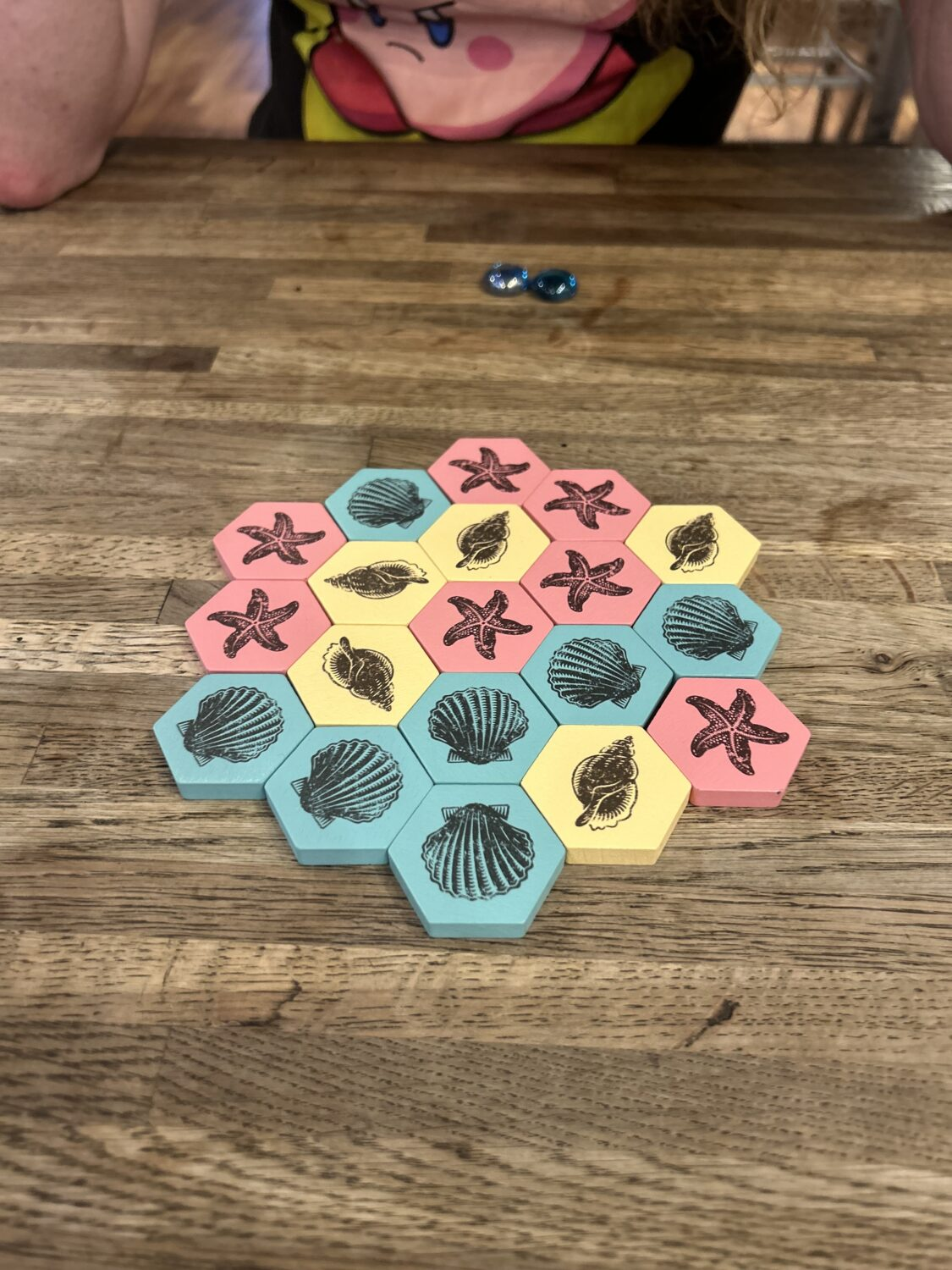
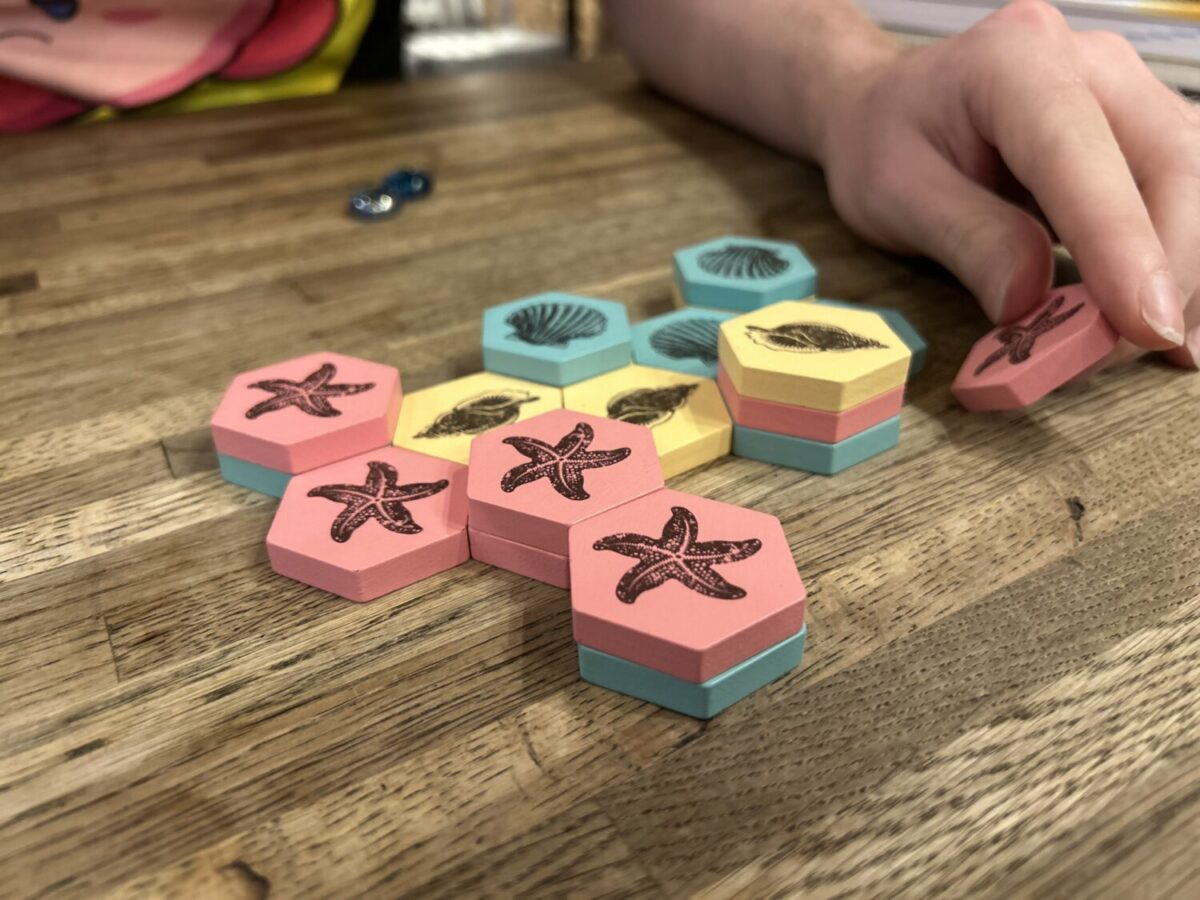
On the page, the rules to High Tide look nothing. They are simple, almost comic. Move a tile, either your own or a neutral one, from a lower position to a higher adjacent one. To move a tile, two things must be true: it must have two or more open adjacent edges, and moving it must not split the group. Moves are compulsory; if you have only one move available to you, you have to make it, even if it is to your disadvantage to do so. The game ends the moment either player doesn’t have a move available to them, and the winner is whichever player has more pieces visible when you look at the board from above.
The beauty of High Tide as a design—to say nothing of the considerable aesthetic beauty publisher Underdog has imbued it with as a product—is in understanding that not one single rule is extraneous. The restrictions on movement make every turn interesting not just on its own merits, in terms of what it gains you in the immediate, but in how it changes the board. What tiles does your move free from prison? Does your move force a move from your opponent? Will it lead to a forced move for you on your next turn? Sometimes, you even find yourself wanting to do the “worse” move for you, because it improves your chances in the long run.
Before you know it, the game is over. A match is first-to-three, and it never runs longer than 15 or 20 minutes total. High Tide threads the needle of offering satisfying decisions in a brief playtime. Like an Elastica single, it doesn’t overstay its welcome. You often want to start over again the moment you’re done.
ITERATION
So what changed? Game design is a process of increments, changing values and specifics in bits and pieces to see how the whole is impacted. I couldn’t remember the rules well enough to figure out why this underwhelming game had changed into something so excellent. Maybe the “two adjacent sides” rule wasn’t there before? Were you allowed to move any piece you wanted? Something was different, and it had to be something substantial.
I reached out to Marceline. “What’s different? It feels like a completely new game.” There were, it turns out, no rules changes at all. The only thing separating High Tide’s beta from genuine greatness? The size and layout of the board. She added six tiles. “I discovered while working on the game that it improved and became more interesting the larger the grid became.”
I was quick to dismiss the first version of High Tide. I took it seriously, and I wasn’t dismissive of Marceline’s efforts as a designer, but the game didn’t seem worth pursuing to me. Now, with a minimal amount of adjustment, it’s a spectacular game. Let that be a lesson, and an inspiration, to all of us.


