
Alpina Game Review
Related Products
ALPINA BOARD GAME REVIEW
I love small board games, especially those that make a much bigger impact than one might expect from their size. In Alpina by HELVETIQ, players collaboratively create a board with scenes from the Swiss Alps and earn points in the process. Let me tell you about Alpina!
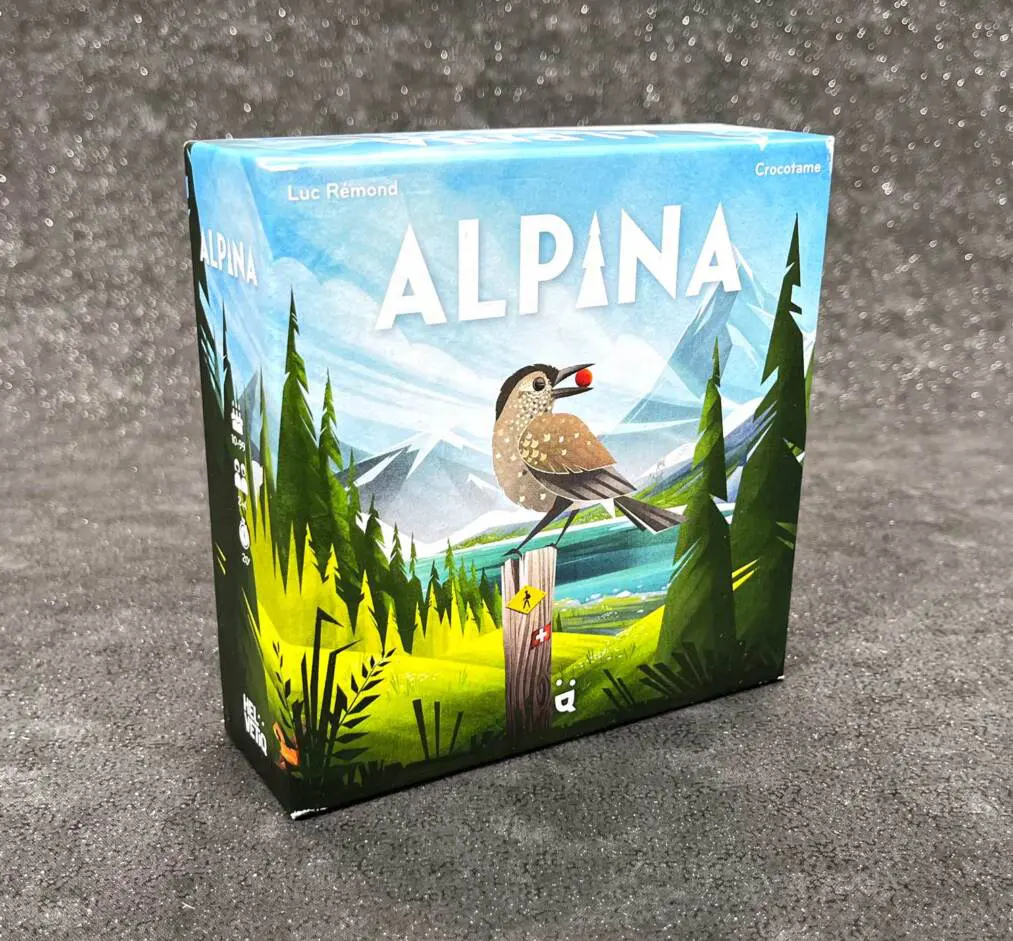
Alpina is a board game for 2-4 players. Over several rounds, players place landscape cards in a 5×5 grid. The only rule is that you must place your card directly next to a card already laid out.
The player can then decide to place one of their wooden tourist figures on the card just laid out or on a card directly adjacent to it.
This continues until the 5×5 grid is completely filled, after which the players count their points.
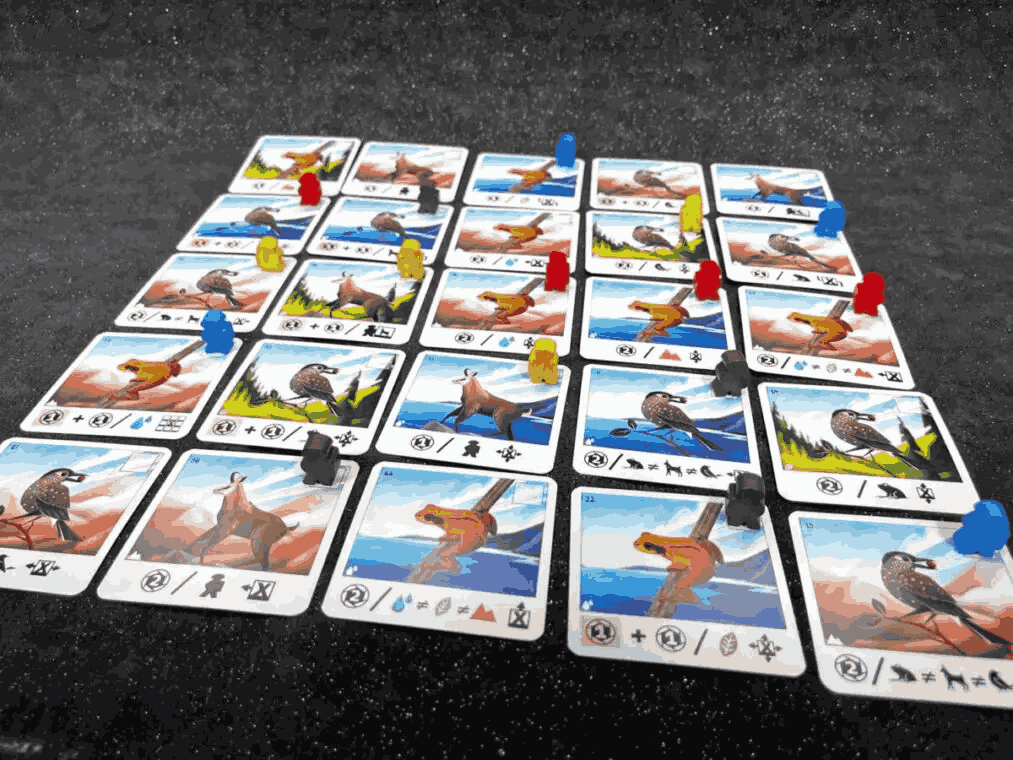
“Wow,” you might say, “that’s easy.” And you would be right if that were all there was to this game. But I haven’t yet explained why you choose one of your cards over another and why you decide to place it in a particular location.
SCORING
When you look at each map, the first thing you notice is that it looks exactly like a Polaroid: at the top there is a picture of a bird, a frog, or a goat. Each “photo” also has an icon in the lower left corner that indicates the type of landscape—mountains, a lake, or a forest.
The last thing you'll notice is a series of icons at the bottom of the map, each representing a specific way to score points. Some of them are simple: 1 point for each tourist figure of any color on a forest map, 2 points for each lake map directly adjacent to the card that scores points.
Others are much more complex and require more planning: 2 points for each type of landscape to the left of the card (in the same row) or 1 point for each bird connected to this card horizontally or vertically.
And remember… you don’t have to place the tourist right after you’ve laid out your card. You can intentionally leave an attractive area, hoping that another player will “peck” at it. And when he places his tourist, you can close the trap — lay out the next card with the tourist and take away your opportunity to get points for the corresponding condition.
This is what makes Alpina interesting.
CONCLUSIONS
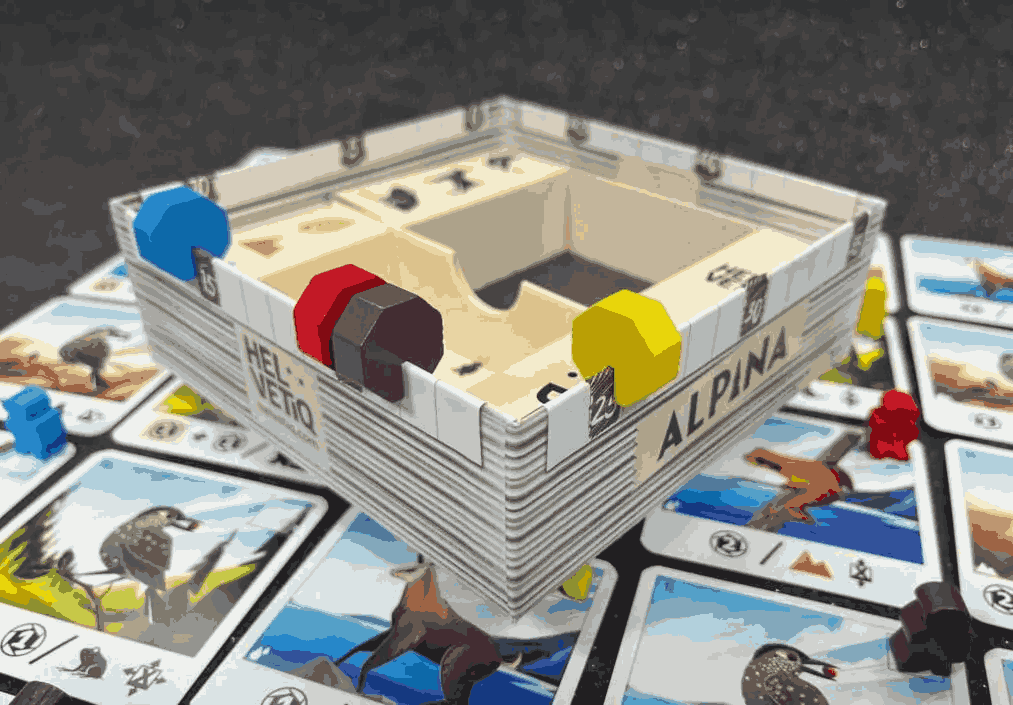
Alpina doesn't have many components: 56 landscape cards, 32 game pieces (scoring figures and tourists), and a box that also serves as a scoring track along the outer edge. And the moves are quick: you need to lay out one card and place a tourist if you want. But the game is tricky and requires players to pay close attention to how the playing field changes.
The game starts with one card already on the table. Depending on the subsequent moves, it may or may not end up in the center of the field. This means that in a two-player game, each player will lay out 12 cards and place 8 tourist figures. In a 4-player game, each player will lay out only 6 cards and place 4 tourists. The field fills up quickly, and if you don't pay close attention to the current state of the game, you may miss the opportunity not only to lay out the right card, but also to place a tourist to guarantee points at the end of the game.
Alpina is also very fast, with an average game lasting around 15–20 minutes. So it's a great way to warm up before longer, more strategic games, or a nice way to end a gaming evening and unwind after games of The White Castle or Clans of Caledonia.
So if you're looking for a small-sized game that combines strategy and attractive design, Alpina is definitely worth your attention.


